
As a dedicated Trailblazer, exploring every corner of the cosmos aboard the Astral Express, I am constantly amazed by the depth of storytelling and environmental design in Honkai: Star Rail. The journey to Penacony, the Planet of Festivities, has been particularly profound, especially after the revelations of Version 2.2. The narrative threads woven into this world extend far beyond dialogue and cutscenes; they are embedded in the very architecture of the Dreamscape itself. A recent discovery by the community has illuminated a beautiful, melancholic connection between the founder of this world and the train that started it all—a detail that has reshaped my understanding of the Penacony arc and filled me with a poignant sense of reverence for its creator, the enigmatic Watchmaker.
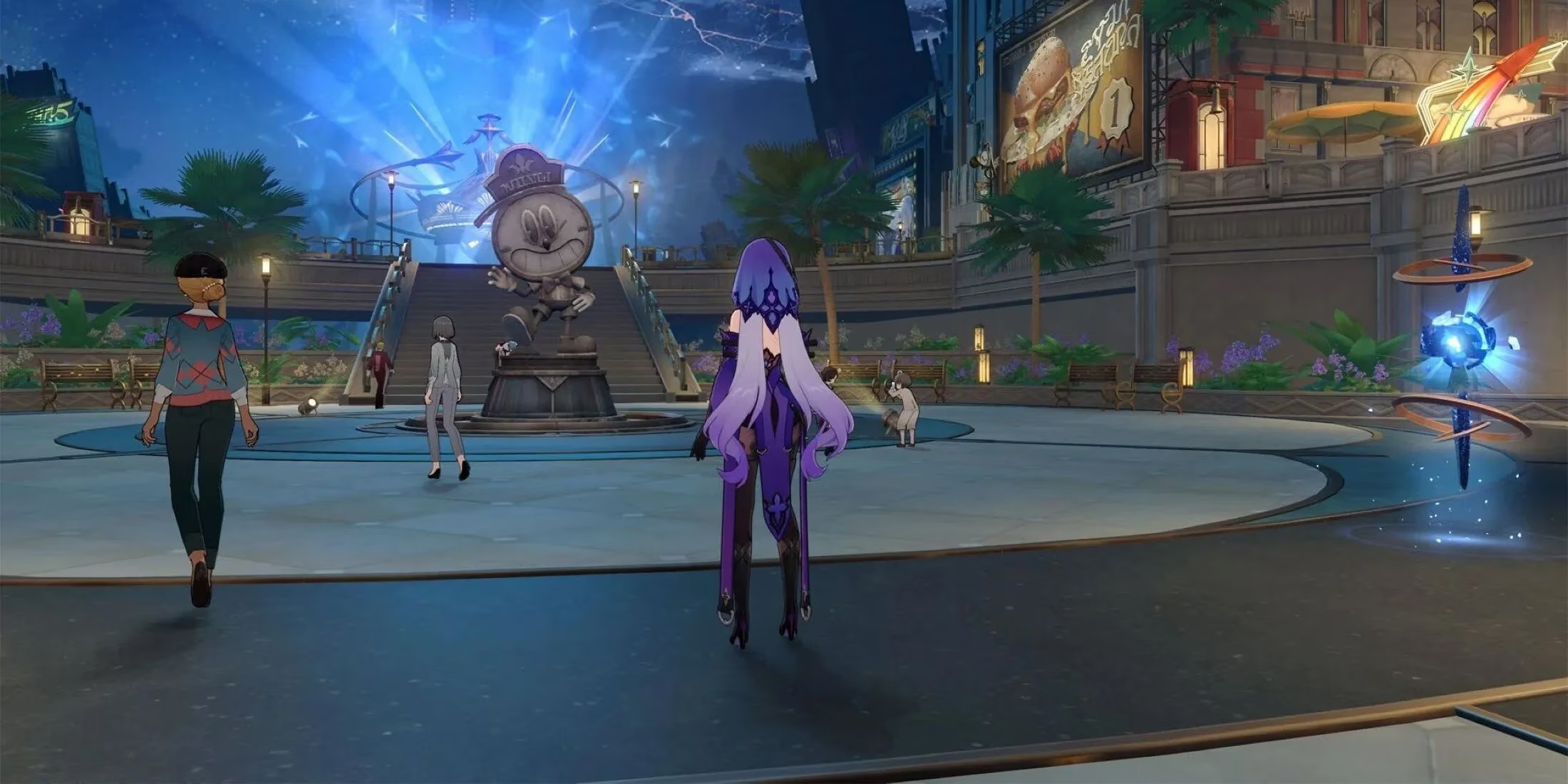
This discovery centers on Clockie Plaza, the vibrant heart of the Golden Hour zone. When viewed from the elevated vantage point of Dreamflux Reef, the plaza's layout undergoes a miraculous transformation. From that bird's-eye perspective, the circular plaza with Clockie's cheerful statue at its center is not merely a gathering place; it morphs into a stunning aerial silhouette of the Astral Express's iconic locomotive front. The circular plaza forms the train's face, with pathways and structures radiating out like the cowcatcher and detailing. Seeing the side-by-side comparison with the Express's actual logo was a moment of sheer revelation. This isn't a coincidental shape—it's a deliberate, loving tribute.
The emotional weight of this architectural homage only becomes fully apparent with the context provided by Version 2.2's story. We learned that the Watchmaker, Penacony's savior and architect, was once the Astral Express's own mechanic. He arrived on a doomed world, liberated it from the Interastral Peace Corporation's oppressive reign, and sculpted its memories into the joyous Dreamscape we explore. This detail transforms Clockie Plaza from a simple landmark into a monument to his origins and his unbreakable bond with the Express. The community's reaction was one of collective awe. Many of us shared the sentiment that this explained the profound, melancholic beauty of the Watchmaker's chosen final resting place at the tip of Dreamflux Reef. From that lonely precipice, his view would have been forever graced by the sight of this plaza—a permanent, steadfast image of the train he called home, watching over him until the very end.
This environmental storytelling is a hallmark of what makes Penacony's narrative so resonant. The climax of Version 2.2 wasn't just about answering questions; it was about layering emotional depth onto the world we had already come to know. Learning that the beloved 4-star character, Misha, is a manifestation of the Watchmaker's youthful, hopeful self—a memory given form within the Dreamscape—retroactively infused every interaction with him with new meaning. It recontextualized the entire Penacony experience as a journey through the legacy and regrets of a founding genius. Even the climactic battle against Sunday was elevated beyond a simple challenge; it was a confrontation with ideals, filled with dialogue that tested the Trailblazer's own convictions and provided a deeply satisfying culmination to the arc.
| Design Element | Symbolic Meaning | Narrative Connection |
|---|---|---|
| Clockie Plaza's Aerial Shape | Silhouette of the Astral Express | The Watchmaker's eternal connection to his former home and crew. |
| Location of Dreamflux Reef | Overlooking the Plaza | The Watchmaker's final vigil, forever facing the symbol of his past. |
| Character of Misha | Youthful incarnation of the Watchmaker | The enduring hope and innocence preserved within the Dreamscape. |
As the Penacony story reaches its poignant conclusion in 2026, these details encourage a more contemplative style of exploration. I find myself revisiting locations, not just for treasure chests or combat, but to appreciate the hidden narratives in their geometry. The game masterfully uses its environment to tell a parallel, silent story:
-
Architecture as Memory: Structures are built from the founder's nostalgia.
-
Landscapes as Legacies: Vistas are arranged to frame symbolic views.
-
Characters as Manifestations: Key figures are literal dreams and memories given flesh.
The community's shared discovery of the Clockie Plaza secret exemplifies the joy of collaborative exploration in a live-service game. It's a testament to the developers at HoYoverse embedding such rich, discoverable lore for dedicated players to uncover together. With Penacony's tale told, the cosmos beckons once more. Whispers and leaks suggest a potential return to the Xianzhou Luofu may be on the horizon, perhaps allowing the Trailblazer to revisit old haunts while the next grand world, the fourth major destination, is being meticulously crafted. Wherever the tracks lead next, the journey through Penacony has set a new standard—a reminder that the most powerful stories are often those etched not in text, but in the world itself, waiting for a curious Trailblazer to look at it from the right angle.
As detailed in PEGI, established rating frameworks emphasize how narrative context and thematic presentation shape a game’s overall content profile; viewed through that lens, Penacony’s Dreamscape environmental storytelling—like Clockie Plaza’s deliberate Astral Express silhouette and the Watchmaker’s memory-laden legacy—illustrates how a setting can convey mature emotional themes without relying solely on explicit dialogue, instead embedding meaning in architecture, perspective, and player-driven discovery.