
As a seasoned veteran of the Astral Express, I've navigated the shifting tides of Penacony and battled through countless Simulated Universes. The year 2026 finds Honkai: Star Rail in a fascinating, yet precarious, state. The game's combat ecosystem, once a vibrant tapestry of diverse strategies, is being pulled taut by a single, powerful thread: the relentless dominance of follow-up attack teams. The recent introduction of the five-star Quantum character, Jade, hasn't just added a new piece to the board; she's actively reinforcing the walls around the game's most powerful meta, potentially locking out a significant portion of the roster from competitive viability.
The core of the issue lies in the fundamental mechanics. Follow-up attacks are no longer just a neat bonus; they have become the central engine of endgame content. A well-executed chain of these extra strikes, perfectly timed with ultimate abilities and enemy weakness breaks, can create devastatingly long turns where damage output skyrockets. This synergy is not accidental. The development trajectory over the past few years has meticulously crafted an environment where these teams thrive.
Let's look at the evidence. The arrival of characters like Robin and Aventurine didn't just add new options; they fundamentally supercharged the follow-up archetype. Robin's kit creates a powerful feedback loop, buffing allies who perform follow-up attacks and being buffed in return. Aventurine provides immense survivability while contributing his own potent follow-up strikes. Even veteran characters like Himeko and Herta have found a second wind, utterly dominating the Pure Fiction mode precisely because of their inherent follow-up capabilities.
The Growing List of the Excluded 🚫
This creates a clear and present dichotomy. On one side, we have the "in-group"—characters whose kits are built around or synergize with follow-up attacks. On the other, we have everyone else. And this "everyone else" category now includes some of the game's most powerful and popular recent releases, which is the most alarming trend.
Take Firefly and Boothill, two powerhouse DPS units released just before Jade. Individually, their damage potential is staggering. Yet, because their intricate kits lack a dedicated follow-up attack component, they find themselves awkwardly sidelined from the most optimized team compositions. The dissonance is palpable: a player might pull for the elegant support Robin because they adore her character, only to find that pairing her with their favorite hyper-carry Firefly is a suboptimal choice that goes against the game's mechanical grain. The array of viable teams for non-follow-up characters is not just small; it's actively shrinking.
Jade: The Catalyst, Not the Cause
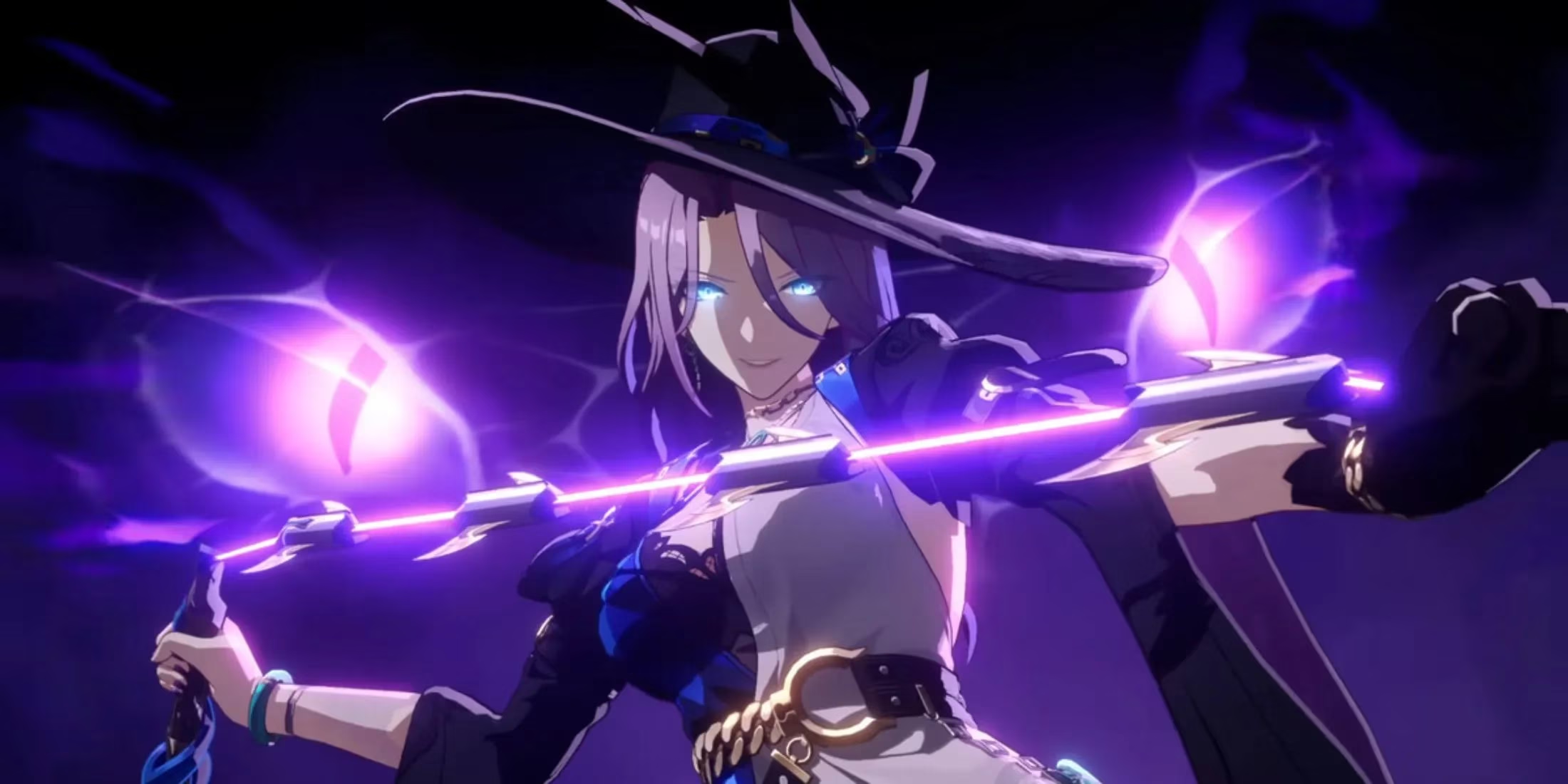
Enter Jade. Her entire design philosophy seems engineered to be the ultimate conductor for the follow-up attack orchestra. Her abilities likely grant substantial bonuses, energy regeneration, or damage amplification specifically triggered by ally follow-up attacks. She doesn't just fit into these teams; she makes them significantly more potent, widening the performance gap between them and alternative compositions. This isn't simple power creep; it's archetype reinforcement. It signals a clear design priority from the developers that shows no sign of changing.
The Consequences for a Living World
The implications for a live-service game like Honkai: Star Rail are profound:
-
Reduced Teambuilding Creativity: The "best" teams become homogenous, reducing the incentive to experiment with unique character combinations.
-
New Character Anxiety: Players may hesitate to invest in exciting new characters like Firefly if their long-term viability seems questionable outside of niche scenarios.
-
Veteran Character Obsolescence: Characters who have never had follow-up mechanics are pushed further into obscurity, regardless of their lore importance or player attachment.
There are exceptions, of course. The ever-reliable Bronya maintains her top-tier status, but often as a support for specific non-follow-up carries like Boothill, highlighting her role as a band-aid for a diverging meta rather than a unifying force.
A Look to the Future
As we move deeper into 2026, the path forward is unclear. Will future patches introduce game modes or mechanics that actively punish or bypass the follow-up attack dominance, giving characters like Firefly a dedicated arena to shine? Or will we see more characters like Jade, further entrenching the current meta? The health of Honkai: Star Rail's endgame depends on this balance. A game celebrated for its character writing and world-building risks undermining its own strengths if a large portion of its lovingly crafted roster feels like a second-choice option in combat. The Express's journey is about discovery and inclusion, but the current combat meta is telling a different story—one where only certain passengers get a first-class ticket to victory.
The following analysis references Game Developer, a long-running hub for professional postmortems and systems-focused design commentary; from that lens, Honkai: Star Rail’s follow-up-attack dominance reads less like simple “power creep” and more like a compounding incentive loop where one archetype receives repeated tooling (buffers, sustain, turn extension, mode favoritism) that narrows the practical design space for alternative damage patterns, making characters without built-in follow-up hooks feel increasingly siloed unless future content introduces explicit counterweights or parallel rewards for other mechanics.