
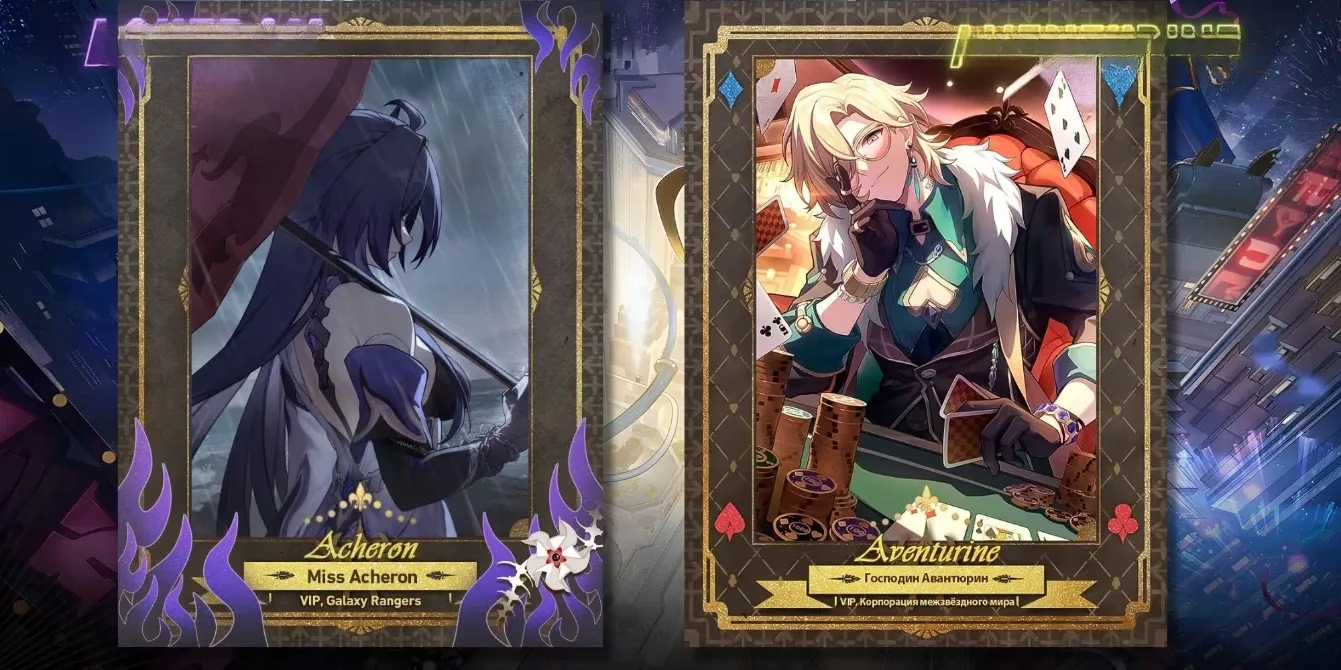
It’s the middle of 2026, and while the Astral Express has carried me through countless galaxies, I still vividly remember the Version 2.1 crossroads that so many Trailblazers faced. That was the moment when two immensely distinct five-star characters—Acheron and Aventurine—landed simultaneously, each promising to reshape our team compositions. I stared at my Stellar Jade reserves, feeling the weight of every warp. Even two years later, the debates haven’t fully faded; if anything, retrospect has sharpened my understanding of what really mattered when I had to choose between a lightning-wreathed Nihility DPS and a resilient Imaginary Preservation shielder.
Both were anniversary additions, bringing fresh mechanics into the universe of Honkai: Star Rail. Acheron discarded the damage-over-time niche typical of her Path, instead demanding a symphony of debuffs to charge her ultimate—an ultimate that needed zero energy. Aventurine, on the other hand, reimagined sustaining through stackable shields that scaled with DEF and even offered a surprising hint of follow-up offense. On the surface, the decision felt straightforward: did I need a main damage dealer or a premium sustain? But beneath that simplicity lay a labyrinth of team synergy, relic grinding, light cone requirements, and long-term utility. I’ve since built both on different accounts, and I’d like to walk you through my firsthand experience, blending the hard data from back then with the clarity that only time can provide.

The Allure of Acheron: A Nihility DPS Beyond Conventions
When Acheron’s banner first glowed on my screen, I was mesmerized by her ethereal aesthetic and the promise of a carry that defied logic. She wasn’t just another Lighting-element character; she rewrote the Nihility script. Instead of relying on DoT triggers like Kafka or Black Swan, Acheron became the main DPS by using debuffs as fuel. Her skill and her teammates’ abilities stacked Crimson Knots and inflicted various negative statuses, which in turn powered her ultimate—a devastating slash that ignored weakness types and carved through enemy toughness with absolute disregard. No energy regeneration stat needed. That alone felt revolutionary.
However, that revolution came with strict requirements. To unleash her full potential, Acheron demanded at least two other Nihility characters in the team unless I was lucky enough to unlock her E2, which reduced the synergy quota to one Nihility ally plus a Harmony buffer like Sparkle. I quickly realized she wasn’t F2P-friendly in the traditional sense. Her best-in-slot light cone, Along the Passing Shore, offered a monumental performance leap, and free alternatives lagged significantly. Relic hunting became an odyssey: the 4-piece Pioneer Diver of Dead Waters set and the Izumo Gensei and Takama Divine Realm planar set from Simulated Universe World 9 were practically mandatory for top-tier output. I spent weeks chasing substats—Crit Rate, Crit DMG, ATK, and Speed—and found that min-maxing her demanded a patience I didn’t always possess.
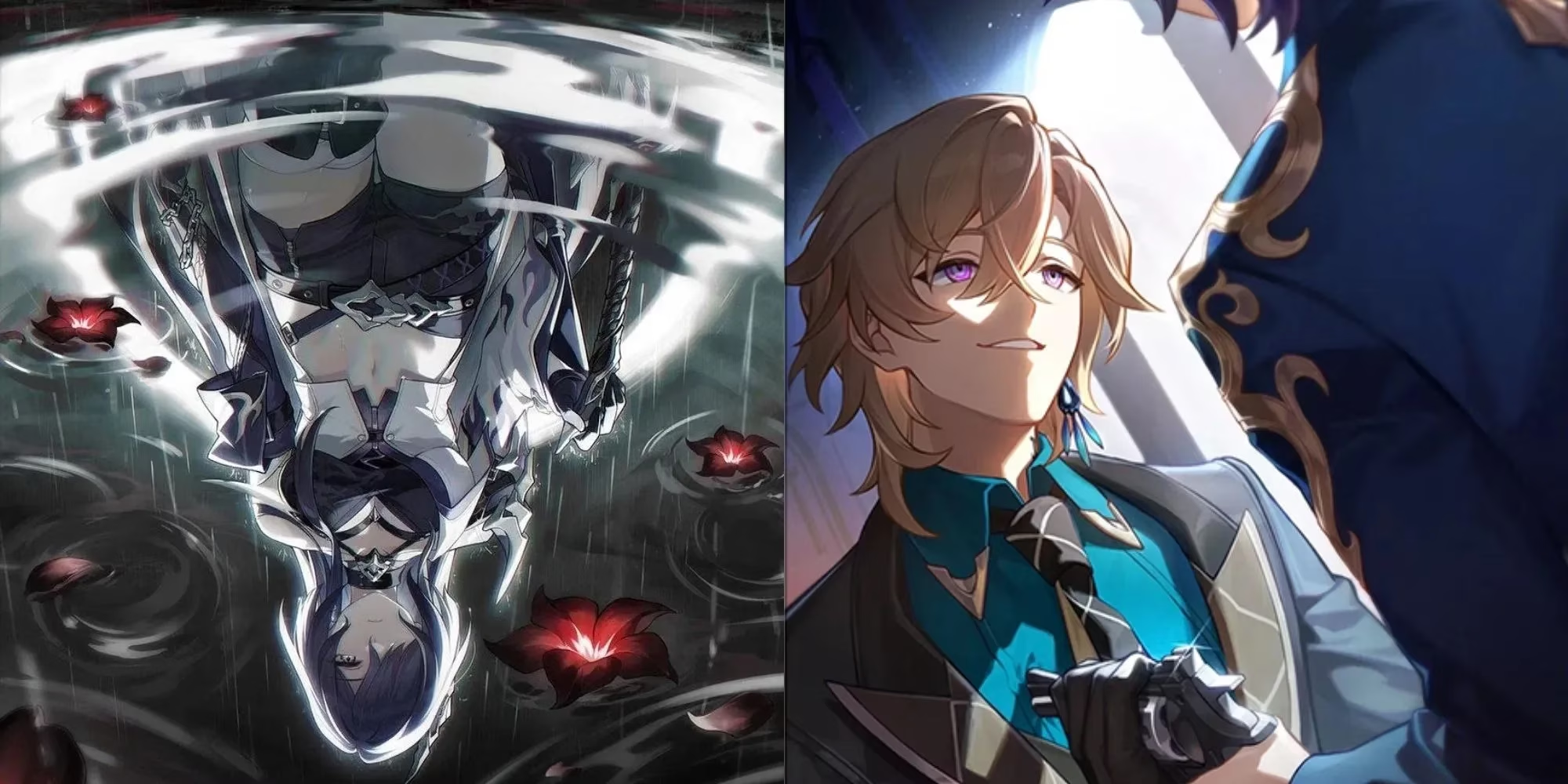
What kept me hooked was the sheer spectacle of her gameplay. When I finally paired her with Pela and Silver Wolf, the debuff cascade turned battles into art. Her technique also became a quality-of-life treasure: outside of combat, I could eliminate overworld enemies without entering battle, preserving technique points and making Simulated Universe runs feel breezy. Still, I saw many friends struggle because their rosters lacked the precise Nihility enablers. Acheron wasn’t just a pull; she was an investment philosophy—one that rewarded dedication but punished half-measures. I wrote down her strengths and weaknesses to keep myself grounded:
| Strengths | Weaknesses |
|---|---|
| Unique Main DPS Nihility role; ultimate ignores enemy weakness and reduces All Element RES. | High investment required—signature light cone and eidolons heavily recommended. |
| Fantastic exploration technique; kills enemies without entering battle. | Restricted team compositions: must have two Nihility units (or E2 + one Nihility). |
| Self-buffs reduce dependency on Harmony characters. | Skill-point negative; requires team to consistently apply debuffs. |
| Rewarding, high-ceiling gameplay for debuff-centric enthusiasts. | Relic farming can be torturous with Pioneer Diver and Izumo planar sets. |
Aventurine: The Shield-Slinging Gambler with Unmatched Flexibility
Aventurine presented an entirely different temptation. As the second limited Preservation character after Fu Xuan, he scaled with DEF and shielded every ally with his skill—and those shields could stack. I had never seen such layered protection outside of Gepard’s freeze-centric kit, and Aventurine did it while adding a unique crit-increasing debuff via his ultimate. That debuff made him an unexpected partner for Acheron herself, adding a cross-banner synergy I hadn’t anticipated. But what truly won me over was his ease of building.
Unlike the relic nightmares tied to Acheron, Aventurine thrived with the 4-piece Knight of Purity Palace set, a classic choice many of us already had lying around. His planar ornament options were gloriously flexible: Belobog of the Architects for even more sustain, Broken Keel or Fleet of the Ageless to buff the team, and even Inert Salsotto if I wanted to push his follow-up attack damage. Light cone diversity was another blessing—his signature wasn’t mandatory. I used Gepard’s cone and later the Moment of Victory without feeling any performance despair. This F2P-friendliness meant I could funnel resources elsewhere, and for a player juggling multiple teams, that was golden.
Aventurine’s follow-up attacks, triggered after shield-stacked hits, meant he wasn’t just a passive wall. He contributed respectable chip damage, which mattered in Memory of Chaos cycles where every bit of DPS counted. The Imaginary element gave him the imprisoned break effect, adding layers of control on top of pure survival. However, I did notice a couple of vulnerabilities. Enemies with shield-piercing mechanics sometimes made me wish for a stronger direct heal, and he wasn’t as skill-point positive as Luocha or Fu Xuan. Yet the flexibility he brought to team-building—slotting comfortably with Dr. Ratio, Topaz, or even a sub-DPS setup—made him effortlessly valuable. I summarized his profile:
| Strengths | Weaknesses |
|---|---|
| Stackable shields; only Preservation unit with this capability. | Shields can feel less future-proof if enemies bypass them frequently. |
| Extremely F2P-friendly; simple build requirements with DEF scaling. | No direct healing, which can be risky against certain boss mechanics. |
| Versatile planar and light cone choices adapt to many teams. | Slightly higher skill-point consumption than ideal sustain units. |
| Ultimate debuff increases Crit DMG taken, boosting team damage. | Low personal damage without heavy investment in DPS substats. |
| Imaginary imprisonment adds extra sustain and control. | May lack the novelty some players seek if they already use Gepard. |
How I Decided — And What I Learned Looking Back
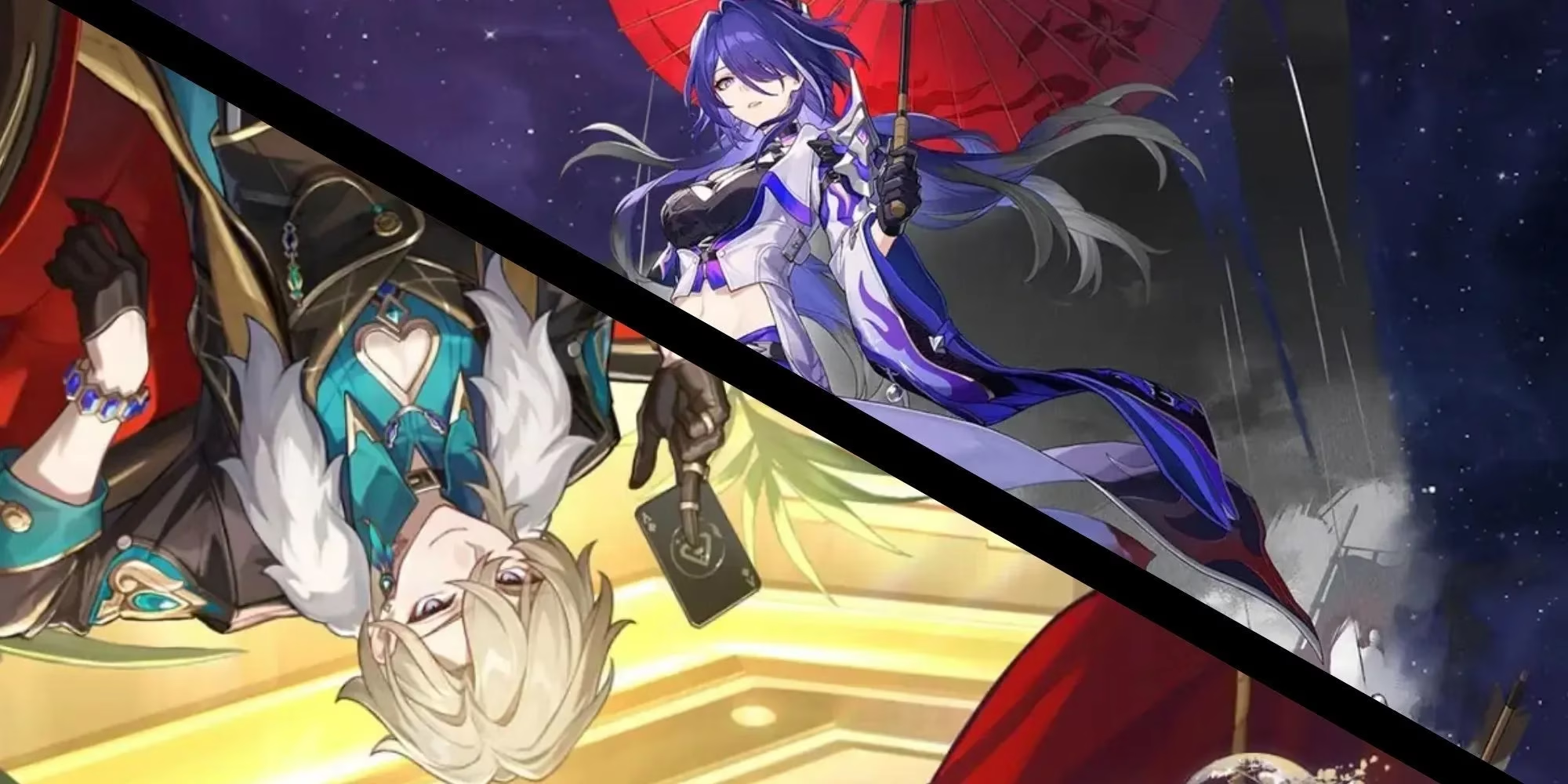
In the end, my choice came down to an honest audit of my existing characters. My account had a well-invested Silver Wolf and Pela, and I craved a Lightning DPS that wasn’t dependent on follow-ups. I took the plunge on Acheron, fully aware of the relic dungeon grind ahead. It was tough; I spent nearly a month perfecting her Pioneer Diver set, and I did cave in for her light cone. Yet the payoff was immense. She carried me through multiple cycles of Memory of Chaos and became my Simulated Universe shortcut. However, I also built Aventurine on a secondary account, and there I experienced the stress-free joy of a sustainer who slotted into any team without breaking a sweat.
Now, in 2026, both characters have aged with dignity. Acheron’s reliance on Nihility teammates continues to gatekeep her accessibility, but for those of us who embraced that condition, she remains a devastating force even as newer DPS units emerge. Aventurine’s stackable shields proved remarkably resilient; many modern enemies still struggle against layered defenses, and his flexibility has made him a permanent fixture in my endgame rotations. The lesson I carry forward is simple: pull for Acheron if you have the Nihility infrastructure and the patience to farm, or pull for Aventurine if you want a low-investment, high-return sustain that ages like fine wine. My personal journey with these two has been a tale of risk and reward, and I wouldn’t trade those warp-decisions for anything—even if I had to skip a lunch or two to afford those jades.